It’s a weird feeling, blood rushing your head, your toes floating in mid-air.
But provided you can make your way back to safe landing – exercises such as headstands and handstands offer an exhilarating alternative to resistance training for developing core and upper body strength and can be lots of fun to practise.
Ask any yoga instructor – (especially those who enjoy hanging out like bats from silk cloths attached the ceiling) and they will tell you what being upside down for a minute or more does for them – (that is, if you have more than a few minutes to spare).
Nonetheless, there is scientific evidence that reversing the pull of gravity on the body may improve heart health, which gives reason to support at least some of the many benefits that the yogis will attest to. So let’s go there!
Change your point of view
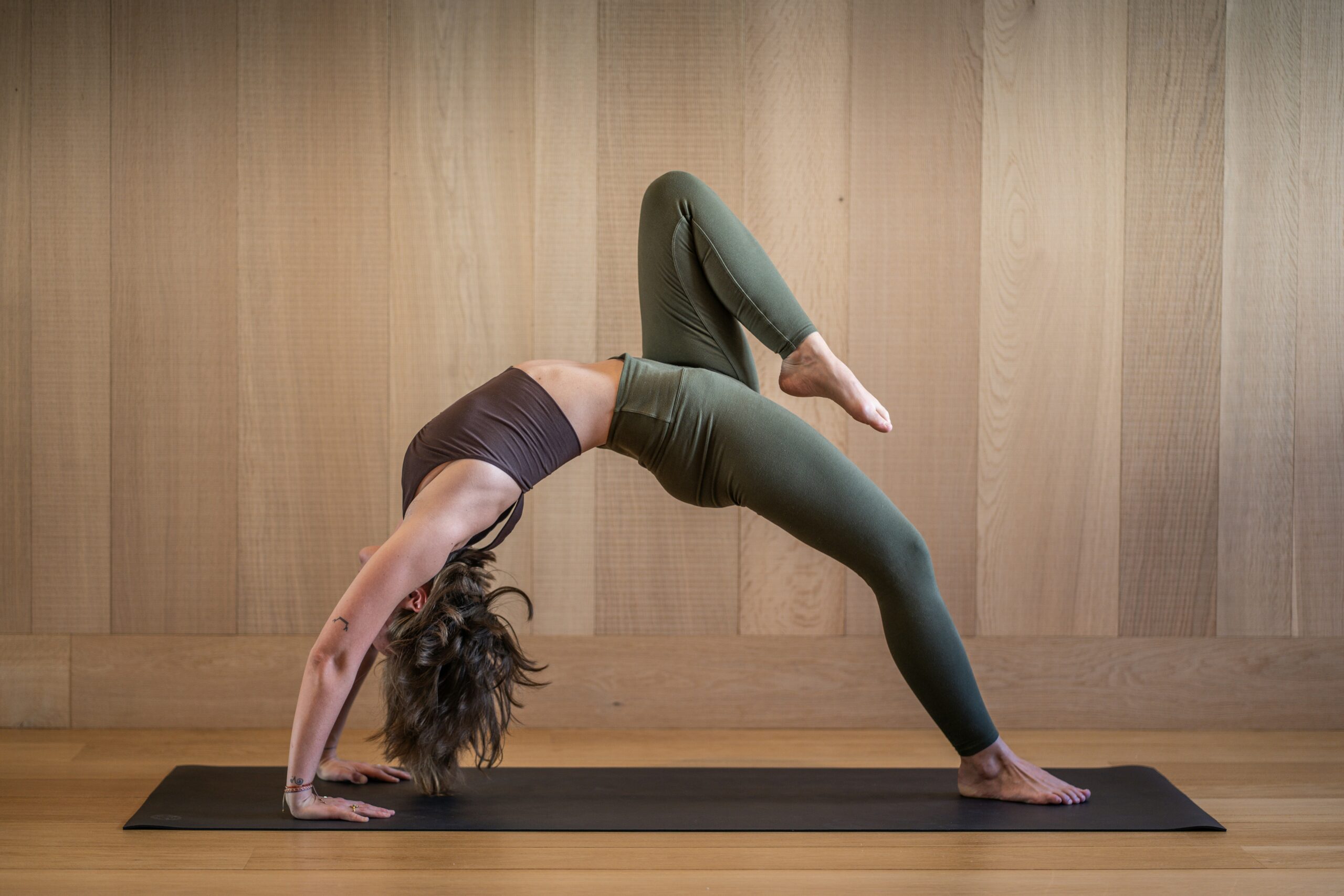
Technically, an inversion is considered to be any position where the head is below the heart, so you need not be balancing “heels over head” when you attempt to practise a basic upside down exercise. In fact, even doing a downward facing dog (hands and feet on the ground), or lying with your legs up on the wall, counts.
In an article written for Body in Balance, Jen Healy, the creator of Aerial Yoga Play states that “the goal behind inversion is to reverse the effects of gravity. Gravitational forces are hard on the body and when you reverse gravity, you relieve incredible amounts of pressure and disrupt your normal rhythms, which carries with it benefits you cannot get with any other exercise.”
Listed as some of the potential benefits of inversions, according to Healy and further cited by Healthline, hanging upside down may promote:
- relief from backpain,
- better flexibility,
- improved posture,
- better focus,
- improved core strength,
- better circulation and lymph drainage.
In addition, a small-scale Swedish study published in BioMed Central Research Notes that looked specifically at the effect of inversions on heart rate variability, found that practising inversions regularly had a “restorative effect on the autonomic nervous system and increased vagal tone”, which are positive indications for improving heart health.
On the flipside
While practising inversions can be fun, they are not for everyone. The Mayo Clinic warns that hanging in a head down position for too long can be risky, especially for people with “high blood pressure, heart disease or glaucoma.”
It’s also not safe to practise inverting if you are overweight or pregnant, have a hernia, osteoporosis or any other heart condition.
Always check with your doctor before trying a new exercise and if you’re not sure how to set yourself up in the correct position, have an experienced professional such as a yoga or gymnastics instructor guide you. Only then, go “a-head” and turn your world upside down!
References:
Body in balance. The Spine: Benefits of hanging upside down. Available [online] https://bodybalancemaui.com/spine-benefits-upsidedown/
Chertoff. J (2019) How Does Hanging Upside Down Affect My Body? Available at Healthline [online] https://www.healthline.com/health/hanging-upside-down
Mayo Clinic. Inversion Therapy: Can it relieve backpain. Available [online] https://www.mayoclinic.org/diseases-conditions/back-pain/expert-answers/inversion-therapy/faq-20057951
Olshuff. S. Yoga U. New Yoga Study: Inversions Improve Major Marker of Heart Health https://yogauonline.com/yoga-for-heart-disease/new-yoga-study-inversions-improve-major-marker-heart-health
Providence Health Team. (2018) Can hanging upside down improve your health. Available [online] https://blog.providence.org/archive/change-your-pov-can-hanging-upside-down-improve-your-health
Papp. M. et al (2013) Increased heart rate variability but no effect on blood pressure from 8 weeks of hatha yoga – a pilot study by Marian E Papp. Available at the Journal of BMC Research Notes [online] https://www.ncbi.nlm.nih.gov/pmc/articles/PMC3599360/#